
Shenkar College of Engineering, Design and Art
Compás
A generative exploration of flamenco rhythm
About
Compás is my final project for my Visual Communication degree.
The name comes from flamenco, where compás refers to the foundational rhythmic cycle that defines a style of music, dance, or song. It is the pulse that holds the singer, guitarist, and dancer together.
This project connects two of my passions: flamenco and visual communication. It invites viewers to experience rhythm the way a flamenco dancer does, not as something to observe, but as something to play, combine, and feel.
The idea
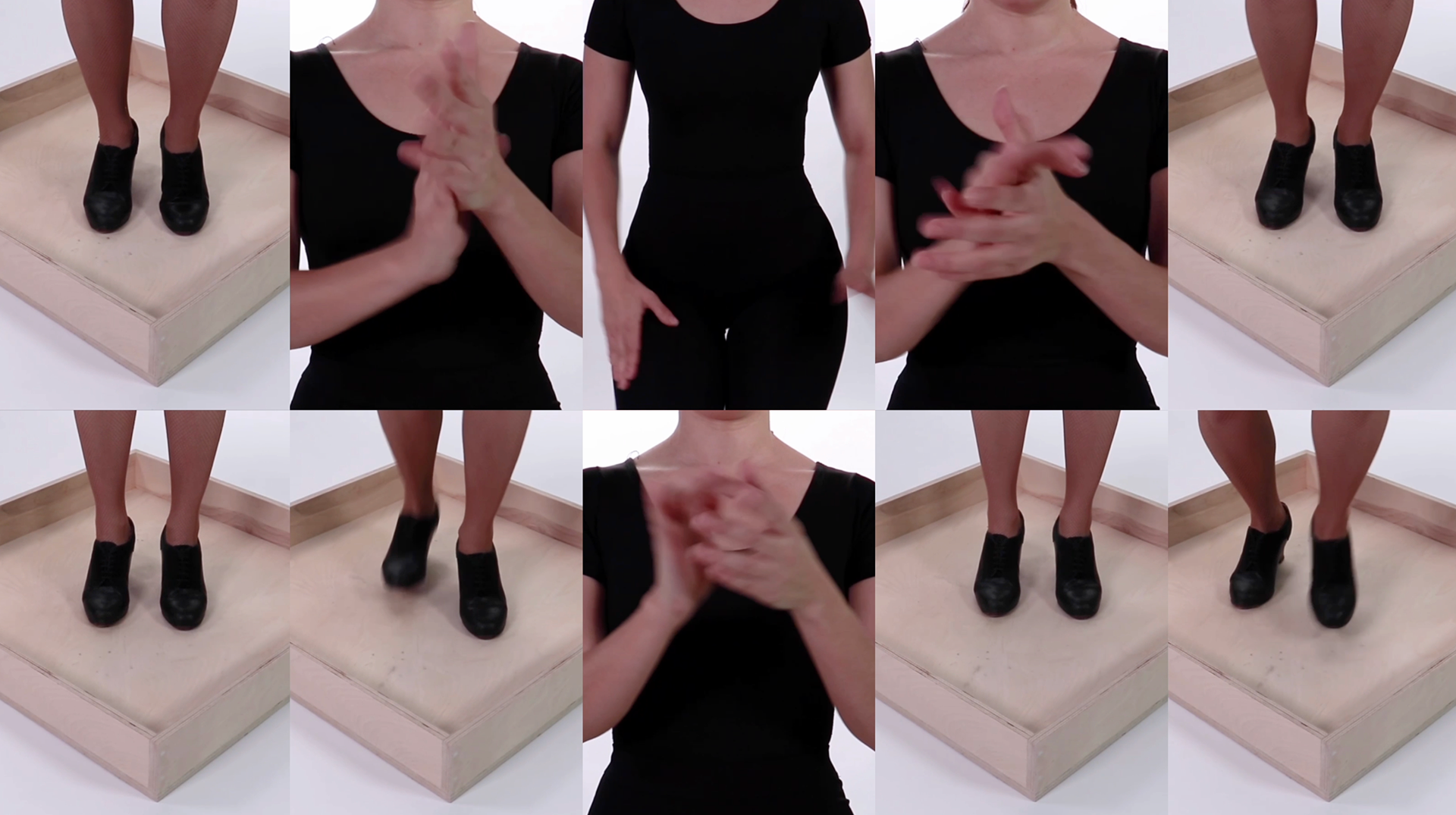
In flamenco, the body itself becomes a musical instrument. Dancers create rhythm through their feet, palms, and movement, often playing multiple rhythmic patterns at once.
Compás translates this idea into an interactive visual system.
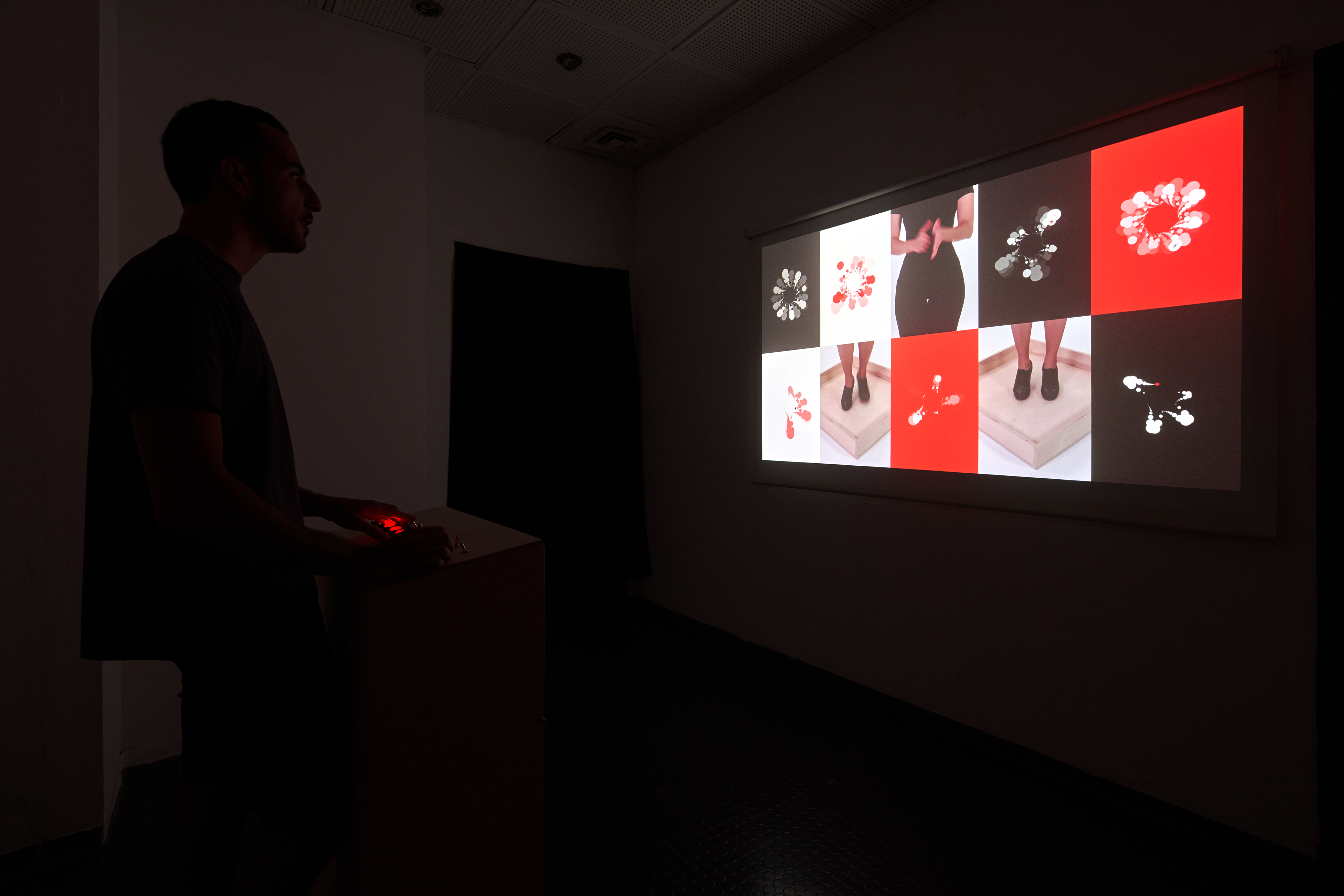
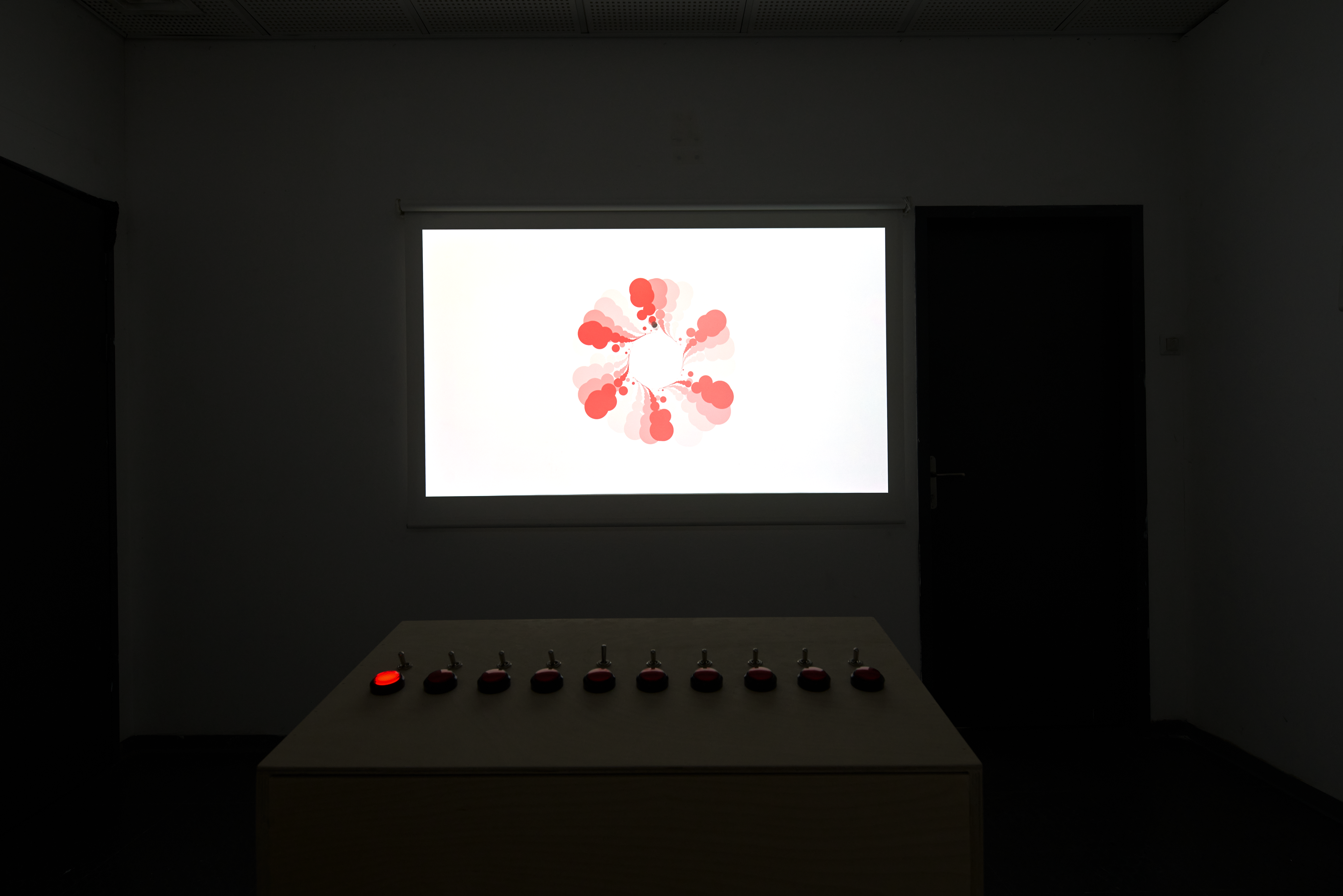
Viewers can play different flamenco rhythms simultaneously and combine them into a single musical composition. Each combination generates a distinct visual expression, creating varying levels of tension and intensity that the viewer controls, much like a dancer shaping rhythm through their body.
No prior musical or dance knowledge is required. The piece is designed so anyone can experiment with rhythm, sync multiple patterns, and experience the result as both sound and form.
Experiencing rhythm
When I dance, I begin by focusing on rhythm, through my feet or my palms. As I settle into it, the physical movement fades and the experience becomes more abstract. I no longer think in steps, but in shapes, pulses, and sensations.
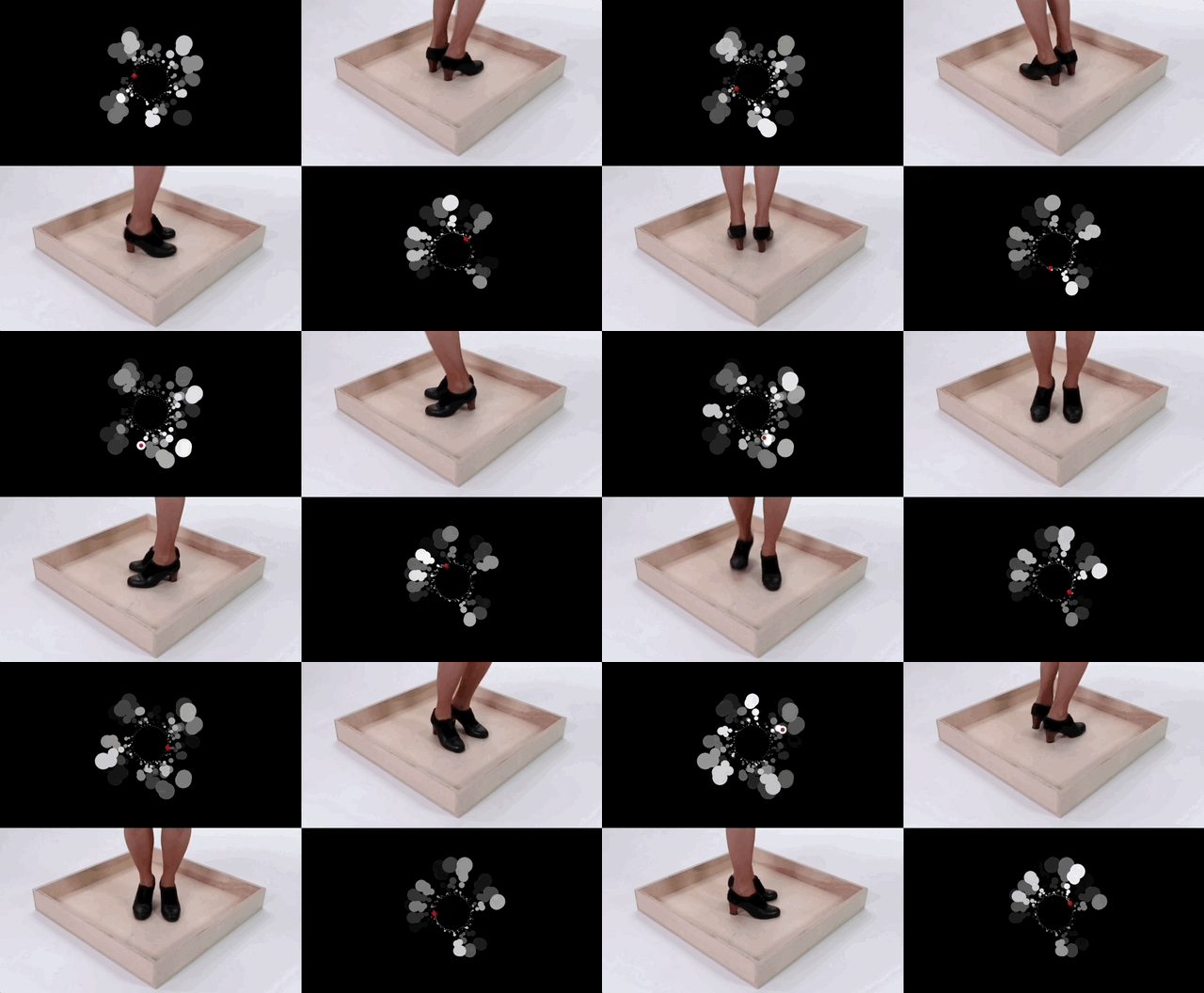
This shift inspired the two visual modes in the project:
• A performative mode, using video recordings of a dancer playing the rhythm
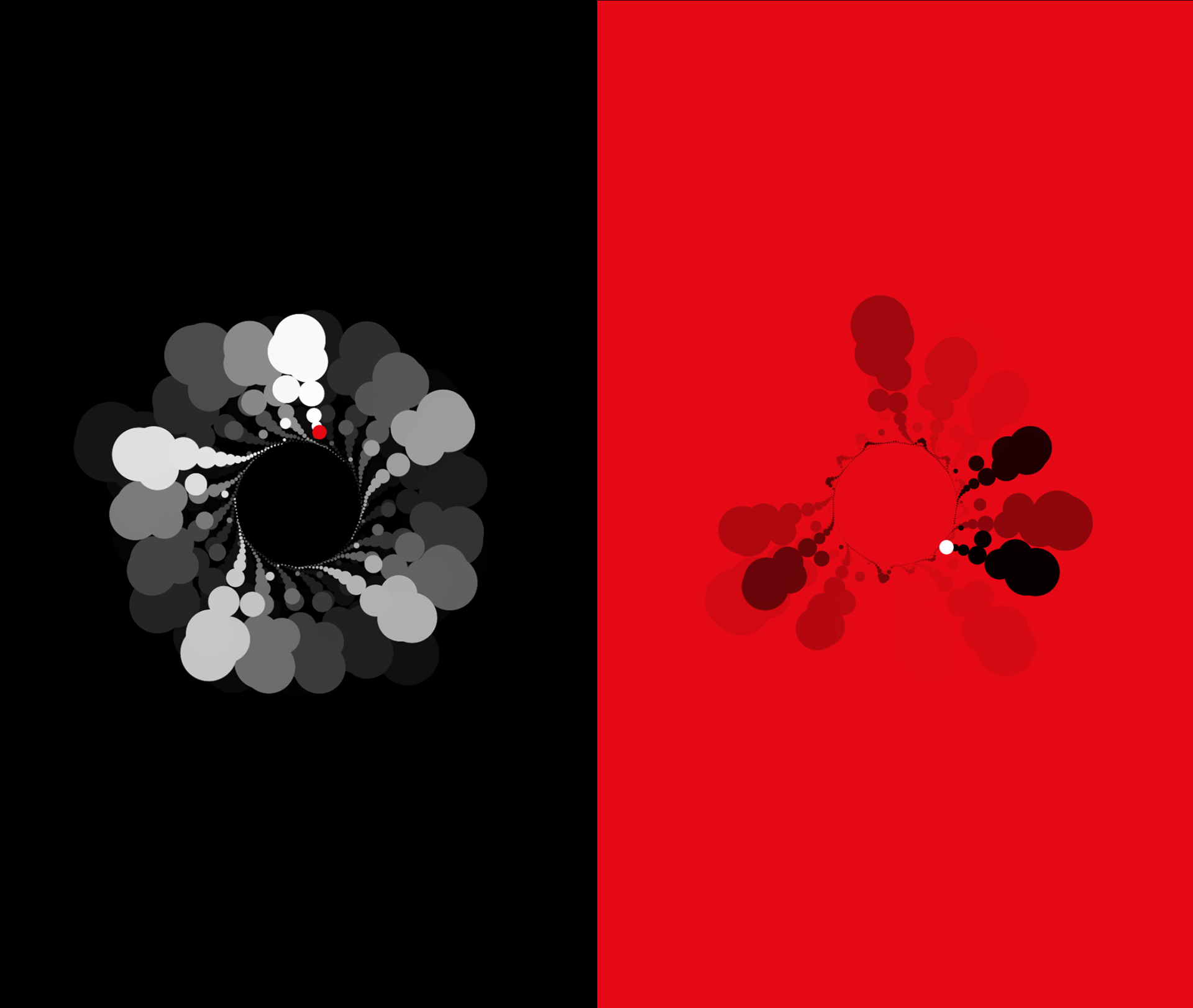
• An abstract mode, where rhythm is represented graphically as evolving shapes
• A performative mode, using video recordings of a dancer playing the rhythm
• An abstract mode, where rhythm is represented graphically as evolving shapes
Together, these modes reflect the transition from physical movement to an internal, almost meditative experience of rhythm.
Imperfection and variability
Because Compás was presented as an installation, the dancer could not perform live during the exhibition. Instead, I used recorded performances, but I wanted to preserve the human quality of imperfection.
To achieve this, I introduced controlled randomness into the system:
• Color roles (foreground, background, and form) change on each run
• The speed of the rotating rhythm marker varies slightly every time
• Color roles (foreground, background, and form) change on each run
• The speed of the rotating rhythm marker varies slightly every time
Even when the same rhythm plays, these variations produce different visual outcomes, much like how no two performances of the same compás are ever identical.
Implementation
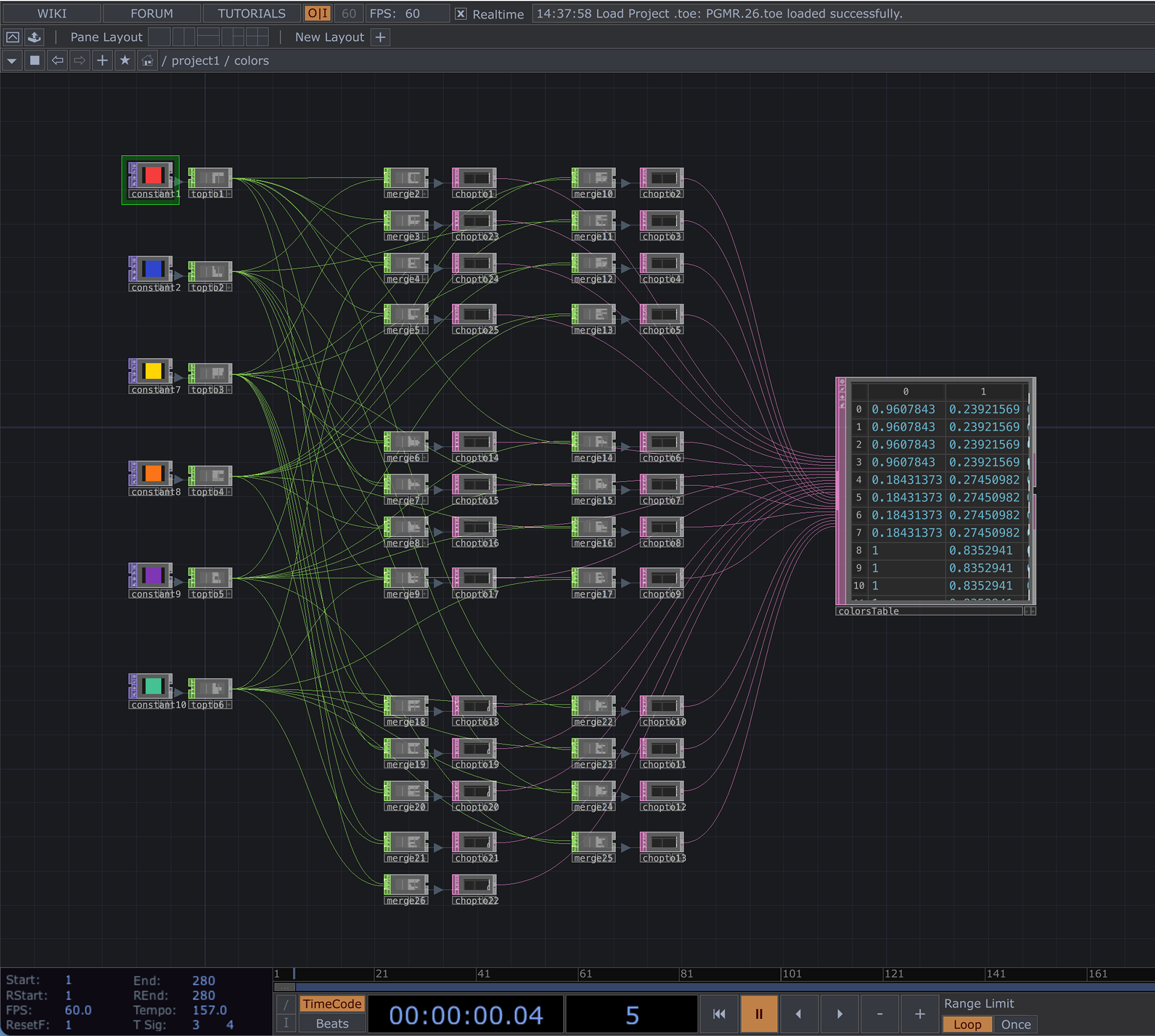
The piece was built as a real-time, interactive system using TouchDesigner, with custom hardware components powered by Arduino and Raspberry Pi. Rather than focusing on a single visual result, the system was designed around rules, relationships, and behavior.
Why this project matters to me
Compás was an attempt to share the feeling I experience when dancing flamenco, the sense of making music with the body and of being part of a rhythmic conversation.
This project reflects how I naturally approach design: by thinking in systems, embracing constraints, and allowing variation to emerge through interaction. These same principles continue to inform my work in product design, especially when designing tools and experiences shaped by behavior rather than static outcomes.